Leak detection Govanhill, Glasgow by ADI Leak Detection
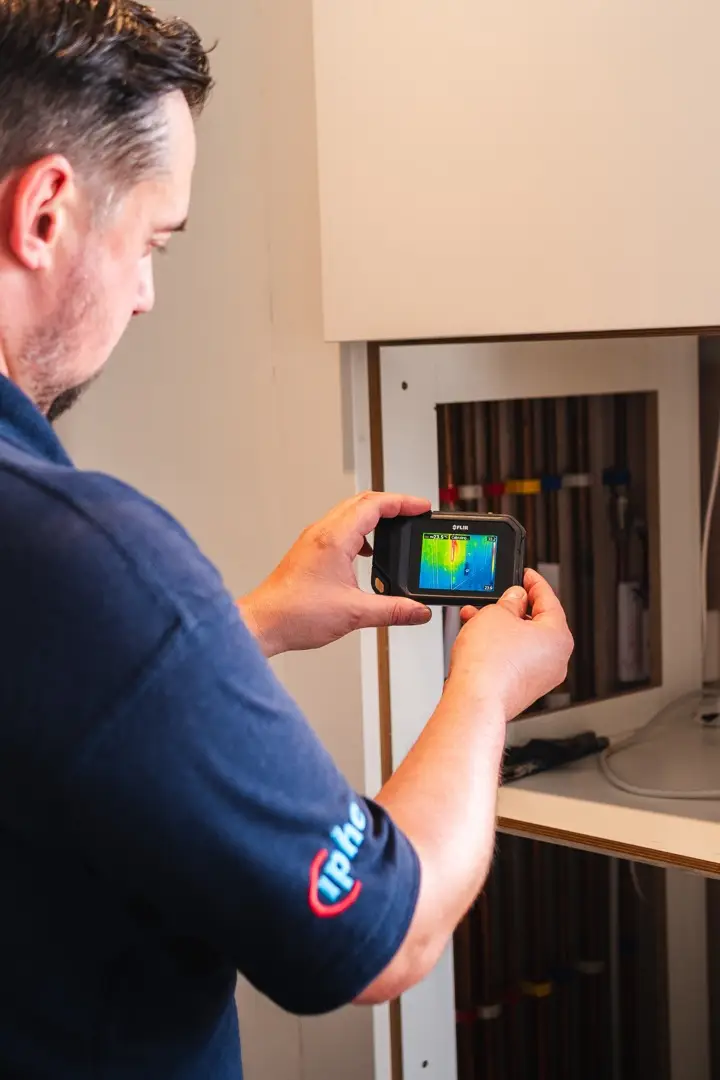
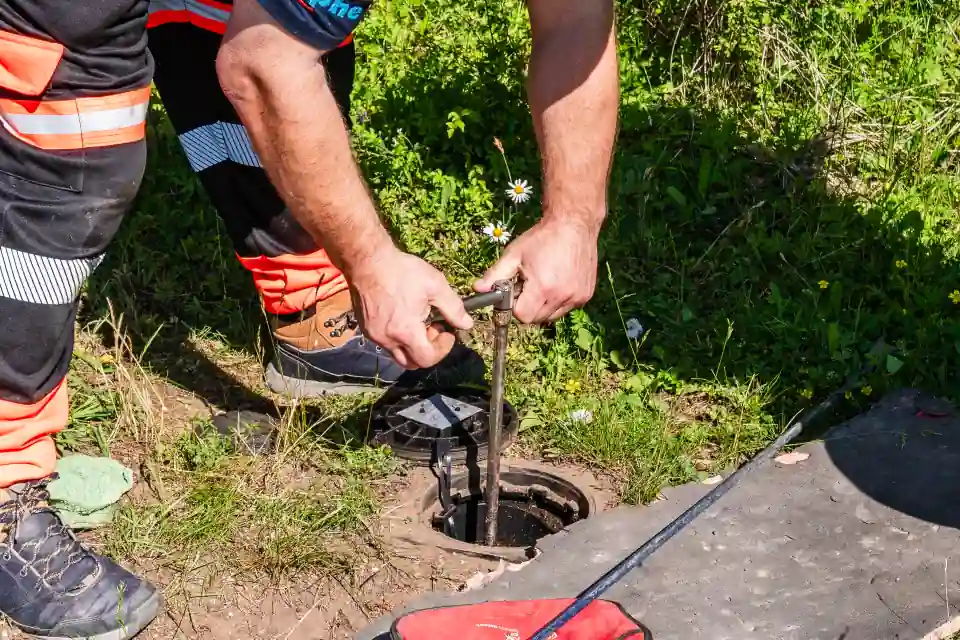
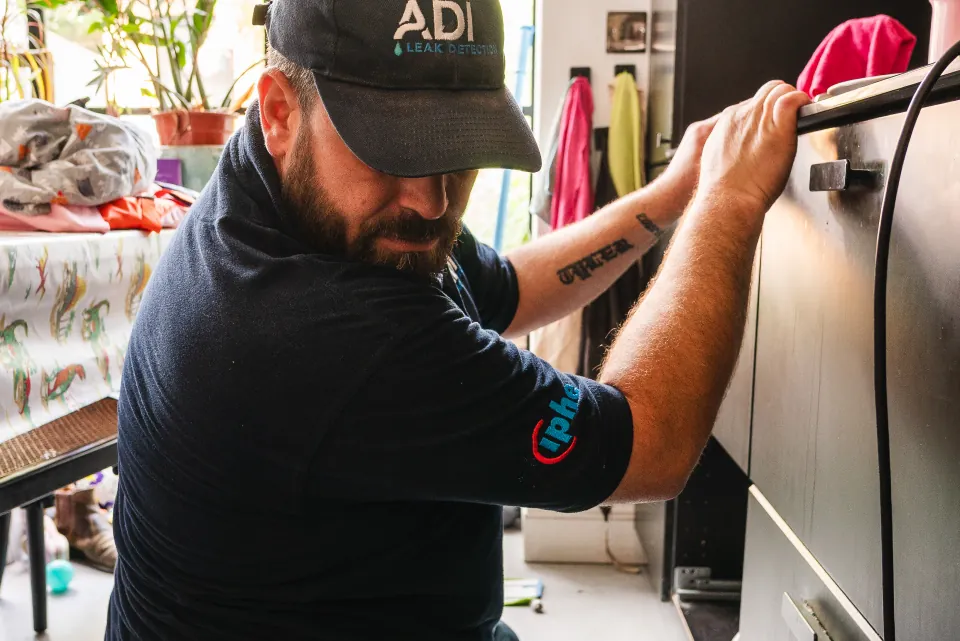
ADI Leak Detection engineer Hamaad Janjua, based in Giffnock, finds hidden leaks in the tenement flats and houses of Govanhill (G42), pinpointing each one before any floor, wall or ground is opened. Plumbing, heating and water mains leaks can be repaired by the same engineer.
Hamaad Janjua, Leak Detection Engineer at ADI Leak Detection
Hamaad, Your Govanhill Leak Detection Expert
Hamaad Janjua is an ADI Leak Detection engineer based in Giffnock, 3.5 miles from Govanhill by the A77. More than nine in ten Govanhill homes are flats, according to National Records of Scotland's most recent count (2017), and Scottish Water says flats usually share a water supply pipe.
Hamaad is well suited to properties with more complex pipework arrangements. He specialises in finding hidden water leaks with thermal imaging, acoustic listening equipment and tracer gas, with particular expertise in water mains and domestic plumbing systems. In a Trustpilot review, Ewan describes Hamaad tracing a leak that was coming from an upstairs neighbour's flat.
Plumbing and heating
10 years
Gas heating
8 years
Specialist leak detection
3 years
Leak detection jobs for ADI since
243
Qualifications
Gas Safe Registered, City & Guilds qualified plumber, Water Bylaws Level 2, solar thermal and unvented hot water tanks
Govanhill Leak Detection Services
Govanhill (G42) sits on Glasgow's south side, between Pollokshields, the Gorbals, Strathbungo, Crosshill, Polmadie and Queen's Park, and its streets are lined with sandstone tenements. The south west of Govanhill is one of the most densely populated areas in Scotland. In a tenement, water escaping in one flat can show up as a stain in the flat below, so the source has to be traced before anything is opened up.
ADI Leak Detection's office team speaks to every customer before an engineer is booked.
What leak detection in Govanhill includes
The leak traced from the surface with tracer gas, acoustic listening, thermal imaging, moisture meters and borescope cameras
The leak pinpointed and marked before any floor, wall or ground is opened
A written report by the engineer who attended, with photographs and video, formatted for "Trace and Access" and "Escape of Water" insurance claims
Plumbing, central heating and water mains leaks repaired, with all repair work guaranteed
Roof and structural leaks located and reported in full
What are the signs of a hidden leak in a Govanhill flat?
The signs of a hidden leak in a Govanhill flat are a boiler that keeps losing pressure, a stain spreading across a ceiling, water getting through below a shower or bath, damp with no obvious source, weak water pressure, and water that only comes in when it rains. The table matches each sign to the investigation that finds it.
Signs of a hidden leak and the investigation that finds it
The sign
What it usually means
The investigation
Your boiler keeps losing pressure and needs topping up
Usually a leak on the heating circuit under a floor or inside a wall, sometimes a failed valve or expansion vessel
Central heating leak detection
A stain spreading across your ceiling
Usually a bathroom, a pipe or the roof above, which in a tenement can be the flat upstairs
Ceiling leak detection
Water getting through below a shower or bath
Usually a failed shower tray, seal or trap, or the pipework behind it
Bathroom leak detection
A damp patch on a wall or floor with no obvious source
Often a hot or cold water pipe leaking inside the wall or floor
Hot and cold water pipe leak detection
Weak water pressure, or running water you can hear with every tap off
Can be a leak on the supply pipe, which flats usually share
Water mains (supply pipe) leak detection
Water coming in only when it rains
Usually the roof covering, the flashing or the gutters
Roof leak detection
Bad smells, low-level damp or repeat blockages
Often a cracked or displaced drain or waste pipe
Drainage leak investigation
Which leak detection service does your Govanhill leak need?
Seven ADI Leak Detection investigations are listed below, each with the equipment the engineer uses for that part of the property.
Water mains (supply pipe) leak detection
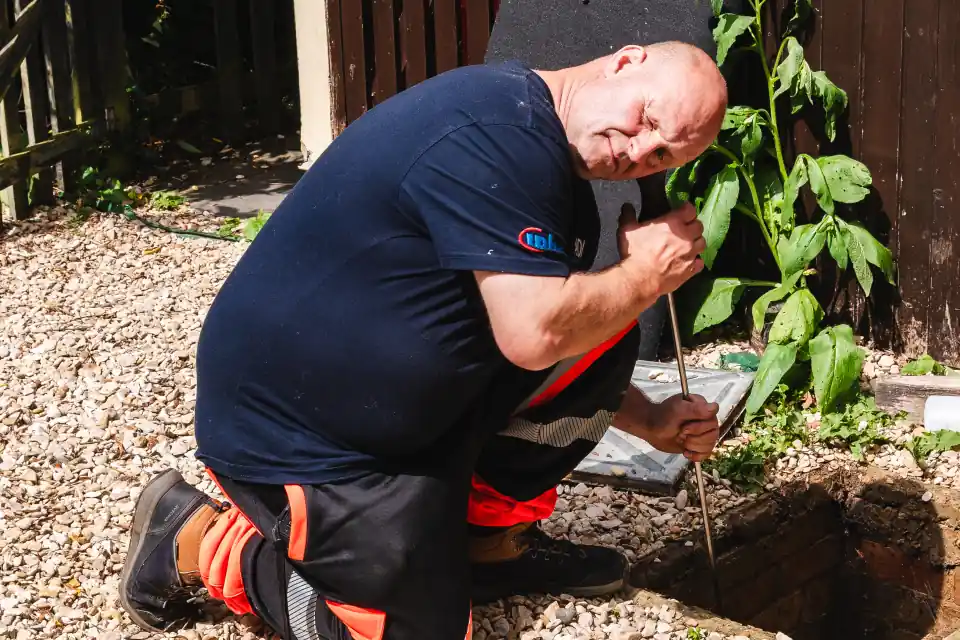
Traces a leak on the supply pipe between the stop cock at the property boundary and the stop valve inside, including a pipe shared by the flats on a close.
Equipment: acoustic ground microphones and tracer gas
Central heating leak detection
Finds where a heating system is losing pressure, from pipework under the floorboards to the pipes feeding radiators through walls.
Equipment: tracer gas, thermal imaging and pressure testing
Hot and cold water pipe leak detection
Locates leaks on the plumbing that runs inside walls, under floors and above ceilings, so only the marked spot is opened.
Equipment: acoustic listening, thermal imaging, tracer gas and borescope
Bathroom leak detection
Tests shower trays, baths, seals and the concealed pipework behind them when water is getting into the floor or through to the room below.
Equipment: thermal imaging, moisture meters and borescope
Ceiling leak detection
Follows a ceiling stain back to its source, whether that is a bathroom, a pipe or the roof above.
Equipment: thermal imaging, moisture meters and acoustic methods
Roof leak detection
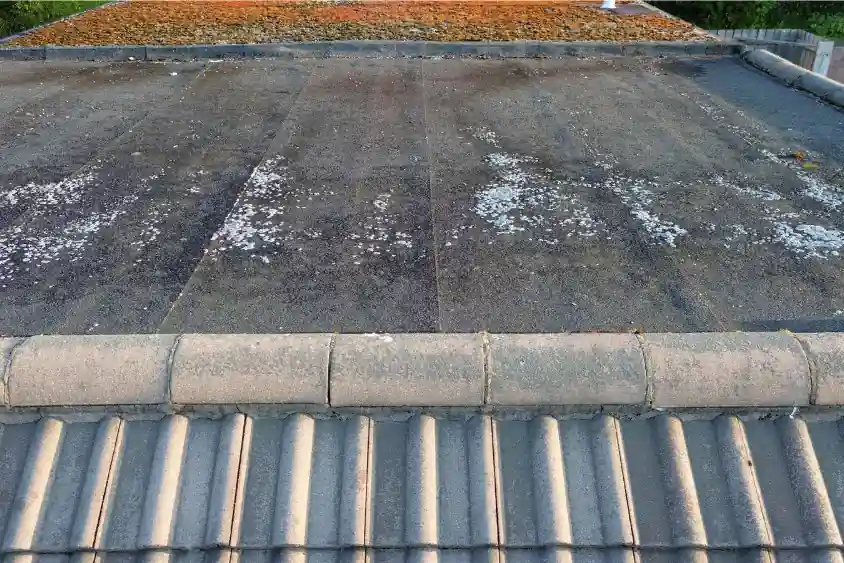
Finds where rainwater is getting in through the roof covering, flashing or gutters. ADI Leak Detection locates and reports roof leaks, and the repair is for a roofer.
Equipment: thermal imaging, moisture meters and drone inspection
Drainage leak investigation
Checks drains and waste pipes for cracks and displaced joints with a camera survey, which is how a drain leak behind damp or smells gets found.
Equipment: CCTV drain survey and acoustic listening
How does ADI find a hidden leak before anything is opened up?
ADI Leak Detection finds a hidden leak with five non-invasive methods. In the Crosshill case study further down this page, damp meter and thermal imaging readings showed where to open the wall.
Tracer gas
Hydrogen tracer gas goes into the isolated pipe and is picked up at the surface where it escapes, through screed, timber, tile or soil.
Acoustic listening
Ground microphones pick up the sound of water escaping from a pipe under pressure.
Thermal imaging
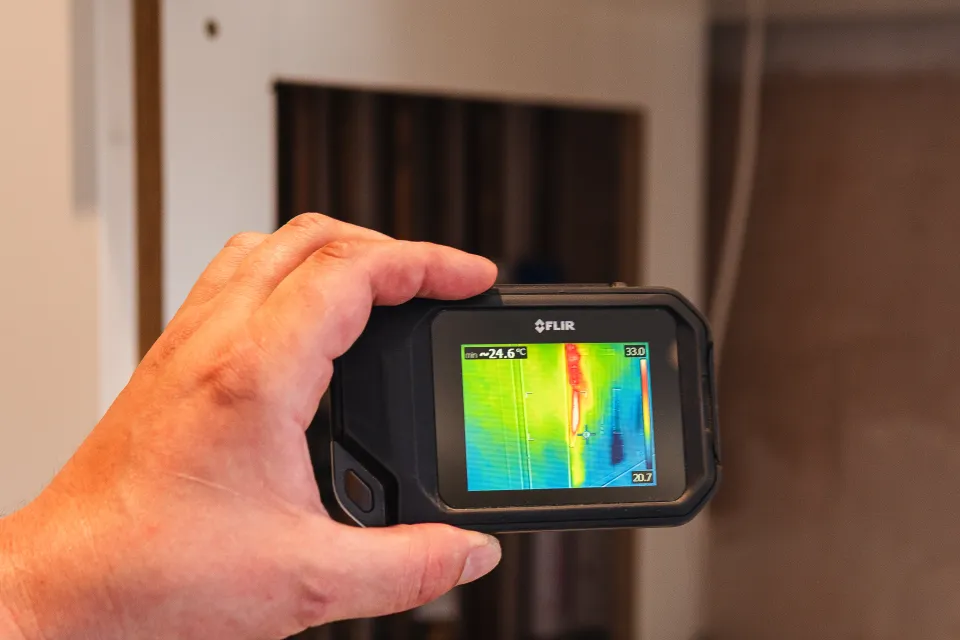
The camera shows the heat pattern of a hot water or heating leak through plaster and screed.
Moisture meters
Pin and pinless meters map how far damp has spread, which tells a live leak from an old stain.
Borescope cameras
A small camera on a flexible lead looks into floor voids, walls and ceilings through a small access point.
Can ADI repair the leak once it is found?
ADI Leak Detection repairs leaks on plumbing, central heating and water mains, and all ADI Leak Detection repair work is guaranteed. You can also have an independent plumber carry out the repair. Roof and structural leaks are located and reported, and their repair is for a roofer or builder.
Leak repairs by ADI Leak Detection
Where you want the leak fixed, the engineer who traced it can carry out the repair, so one engineer sees the job through from the first test to the finished repair.
Repairs by your own plumber
The engineer marks the leak on site and explains it to you before any repair is discussed, and the written report records where it is, so an independent plumber can go straight to it.
Who pays to find and fix a leak in a Govanhill tenement?
Who pays depends on where the leak is. Scottish Water is responsible for the water main in the street and the communication pipe up to and including the stop cock at the property boundary, and property owners are responsible for the supply pipe from there to the stop valve inside the home. Scottish Water notes that flats and older or terraced houses usually have a shared water supply pipe.
Your buildings insurance
Many buildings insurance policies include trace and access cover, which pays for finding the source of an escape of water and for the work needed to reach it. The limit is the part that varies, so check your own policy.
Your leak detection report
Every ADI Leak Detection investigation ends with a written report by the engineer who attended, supported by photographs and video and formatted for "Trace and Access" and "Escape of Water" insurance claims.
Not sure which investigation your leak needs? The office team will talk it through on 0141 363 0314.
Genuine Trustpilot reviews that name Hamaad, shown word for word.
Ewan,
Excellent service.
Hamaad was very prompt, friendly and professional. He attended my property to track and trace a leak coming from an upstairs neighbour’s flat.
He was very courteous and knowledgeable, gaining the complete confidence of my neighbour and tracked the leak quickly, giving a clear explanation of the necessary repair.
His input was invaluable, in what could otherwise have been quite a difficult conversation.
We have just had Hammad out and he was fantastic. He rang me yesterday to confirm the booking and arrived right on time. He was very professional. He was also very friendly and easy to talk to. He managed to locate our leak which was under the concrete in our kitchen floor. He told me right throughout what he was doing and why. He fixed the leak and did a very thorough job. He cleaned up after he was done and I can't recommend him enough. I would be happy for him to do jobs in my house again any time.
Hamaad from ADI was great. He was very thorough with his work and communicated everything very clearly. He was able to locate the leak and provided a detailed report that could be shared with my insurer. He went above and beyond to answer questions about my insurance claim from both me and my insurer. I'd highly recommend their services.
Source located in the third-floor flat, whose owner arranged a plumber to inspect the bathroom pipework and waste pipes
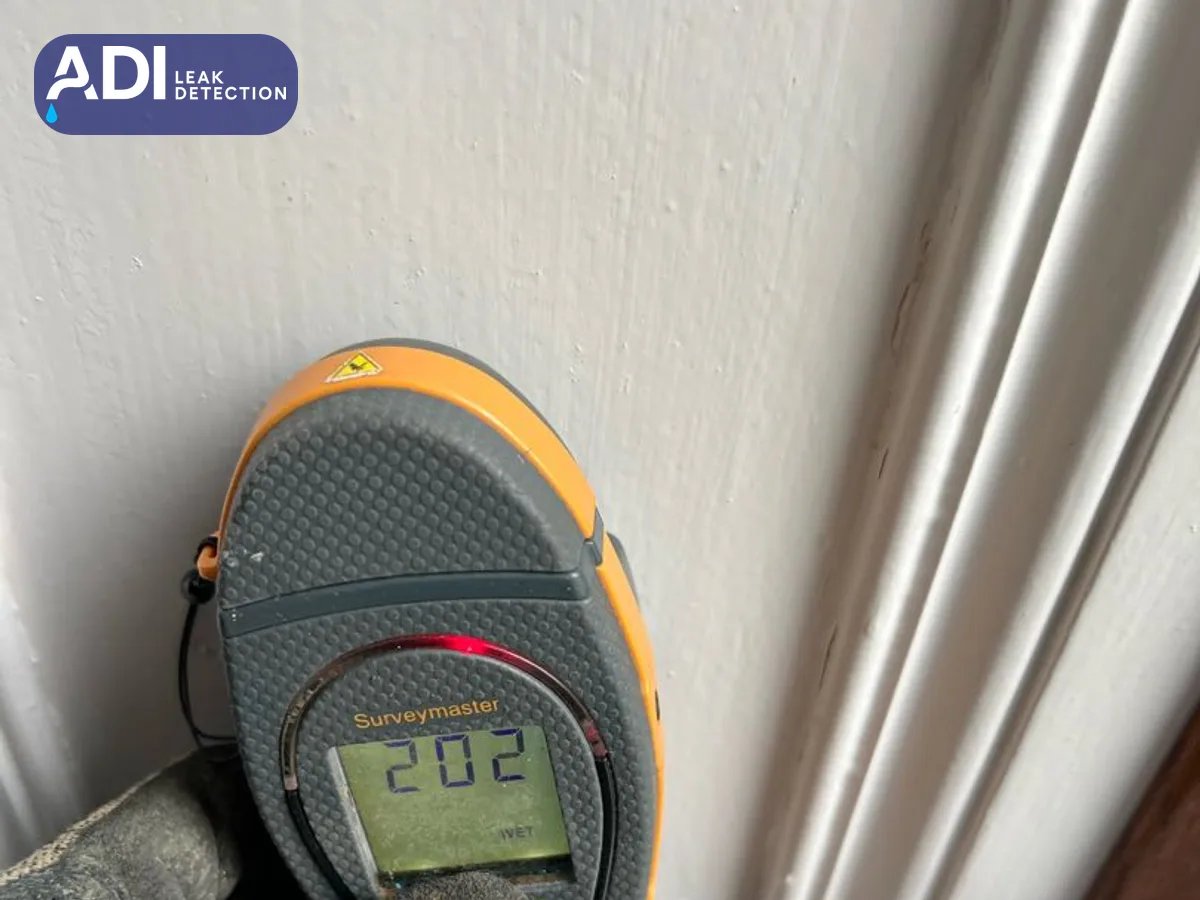
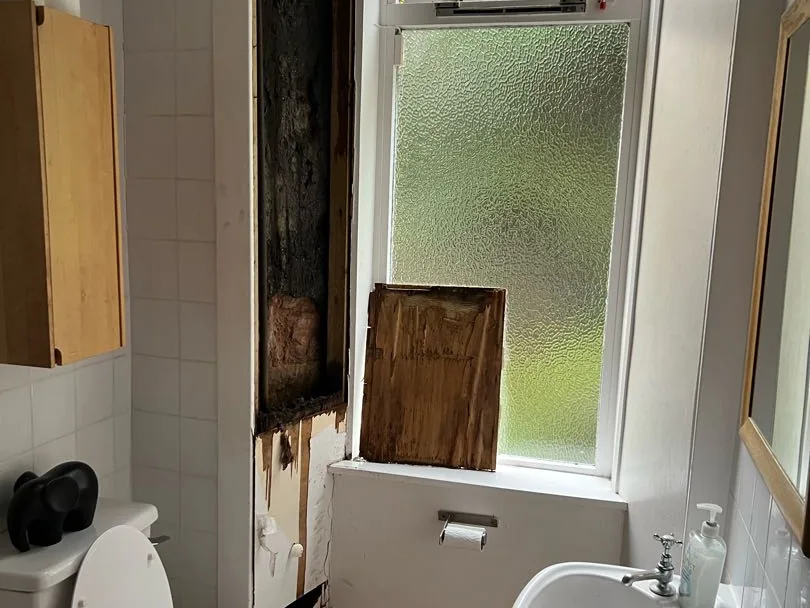
Damp patches had appeared around the bathroom window of a ground-floor flat and on the walls next to it, with no clear sign of an active leak. The flat has no internal stopcock, and the outside shut-off serves all eight flats in the block, so a pressure test could not give an accurate result.
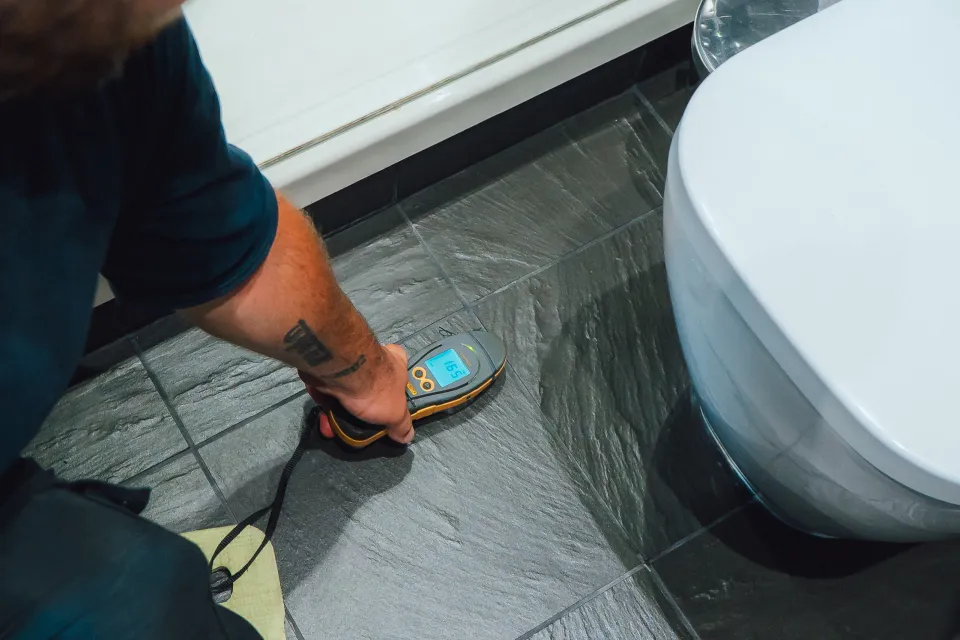
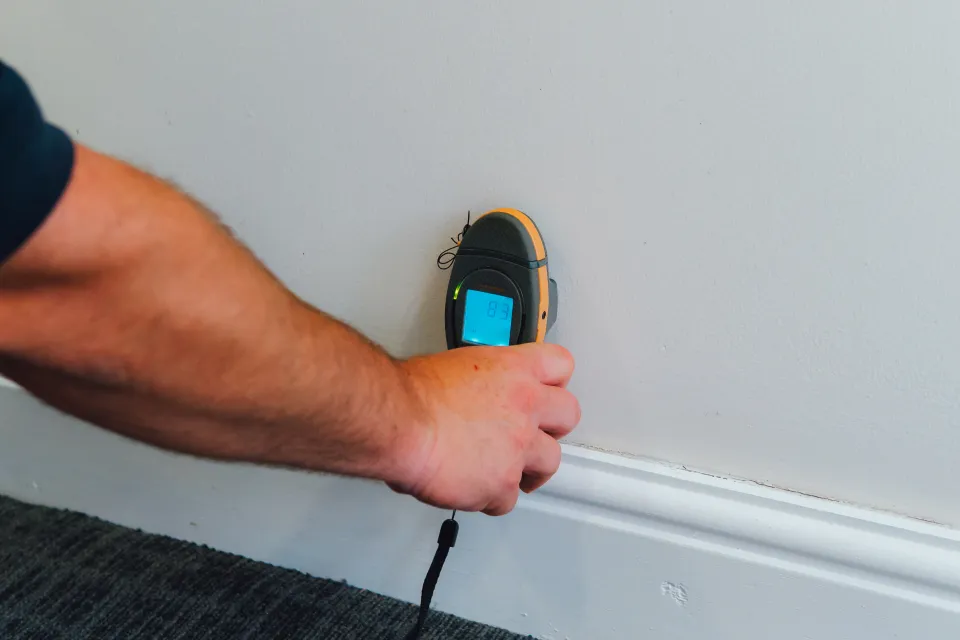
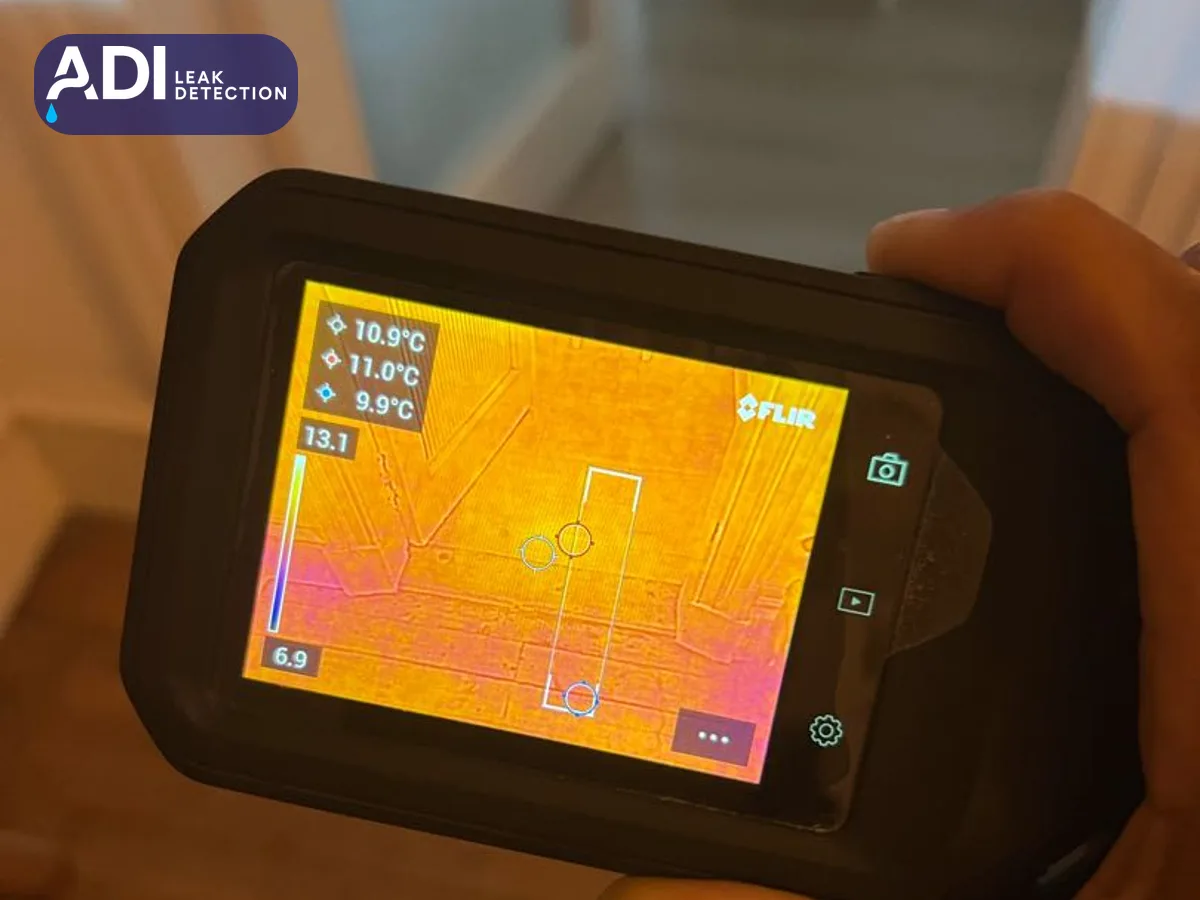
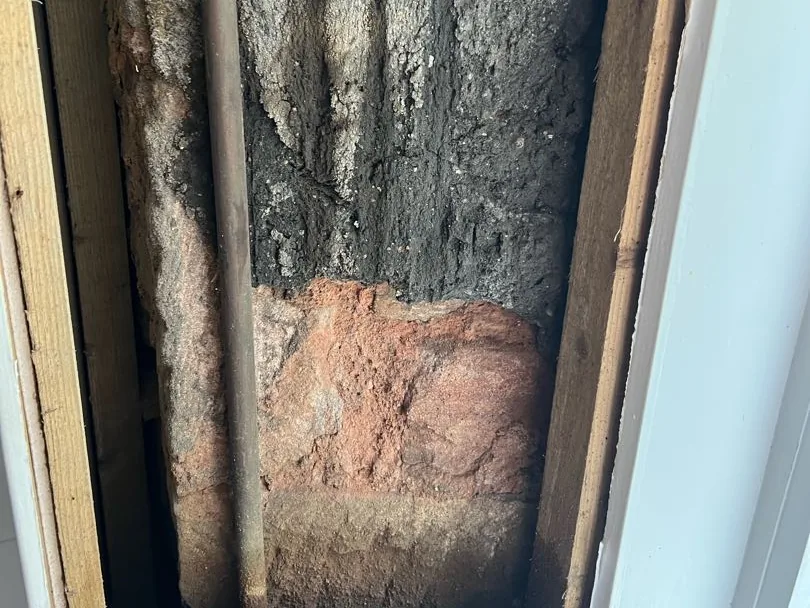
Hamaad's damp meter confirmed wet spots around the window and on the adjoining walls, and thermal imaging showed damp in the same places. In the cellar, where the pipework for every flat is visible, he found no leak, only slight rising damp, likely coming through cracks in the brickwork. With the customer's permission he removed the plasterboard around the bathroom window and found water running down from above, inside the void that carries the block's rising main.
In the flat above, damp meter readings showed wet plasterboard in the void directly over the damage, and a small inspection square, cut with that neighbour's permission, showed water trickling from higher still. The void at third-floor level was dry, which put the source inside the third-floor flat: when its bathroom appliances were used, water leaked into the voids of the two lower flats. That owner was leaving on holiday and wanted to speak to his insurer before any work was done. Hamaad explained that ADI could quote for the further work and advised that a local plumber would likely be the more cost-effective option here, and the owner agreed to have a local plumber inspect the bathroom pipework and waste pipes. Hamaad's report also recommended replacing the damaged area around the bathroom window and the toilet floorboards in the ground-floor flat.
Damp meter readings mapped the wet areas.Thermal imaging showed damp in the same places.The plasterboard came off beside the bathroom window.The void behind it carries the block's rising main.
Contact ADI For Leak Detection in Govanhill
Call ADI Leak Detection on 0141 363 0314 to book a leak detection visit in Govanhill. The ADI office team talks through the symptoms first, such as a rising water bill, a pressure drop or a damp patch, and books the engineer with the right equipment for that leak.